
In the spring of 2008, when the Indian Premier League (IPL) was first unveiled, the global sporting community viewed it as a flashy, high-risk experiment. Eighteen years later, that experiment has mutated into a financial behemoth. As of March 2026, the IPL has officially crossed the threshold from a regional cricket tournament into a top-tier global asset class, with individual team valuations now rivaling legendary NBA and Premier League franchises.
The Viral Spark: Modi vs. Goenka
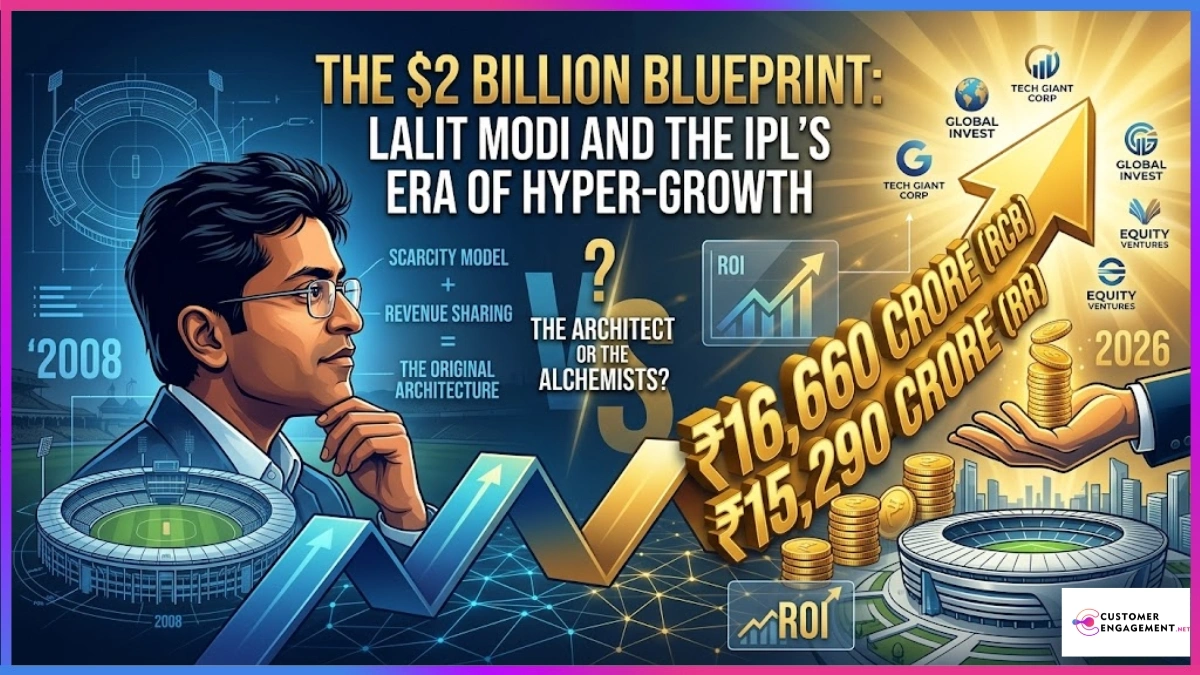
The internet is currently ablaze with a digital “legacy war.” The catalyst was a public exchange between the league’s exiled founder, Lalit Modi, and Lucknow Super Giants owner Sanjiv Goenka. Following the record-breaking sales of Royal Challengers Bengaluru (RCB) and Rajasthan Royals (RR) this month, Goenka publicly lauded the current BCCI leadership for the league’s professionalization.
Modi, never one to stay silent, retorted by calling Goenka a “clown” and asserting that the “architectural DNA” of the league its scarcity model and revenue-sharing structure—was his original vision. This clash has divided fans: some credit the current administration for the league’s stability, while others argue that the current billion-dollar reality is merely the realization of Modi’s 2008 blueprint.
The Numbers That Shook the Market
The 2026 valuation surge is driven by two landmark transactions. Royal Challengers Bengaluru was recently acquired by a powerhouse consortium for a staggering ₹16,660 crore ($1.78 billion). Simultaneously, the Rajasthan Royals, originally bought for just $67 million, fetched a valuation of $1.63 billion.
This represents a nearly 2,400% return on investment for early backers. The entry of global private equity firms like Blackstone and American retail royalty (the Walmart family) into the RR ownership group signals that the IPL is no longer just “India’s game” it is a cornerstone of the global sports economy.
Why the Bubble Isn’t Bursting
Critics have long waited for the IPL bubble to burst, yet the opposite is happening. Three factors are driving this 2026 peak:
- Media Rights Unbundling: Lalit Modi’s recent “trending” advice to the BCCI involves unbundling digital, mobile, and satellite rights for the 2027 cycle. By pitting tech titans like Apple, Meta, and Netflix against traditional broadcasters, experts predict the next rights cycle could eclipse $10 billion.
- The “Lifestyle” Pivot: Franchises are no longer active for only two months a year. Through global academies and year-round digital content, teams have become 365-day lifestyle brands.
- Governance Stability: Despite the friction with Modi, the current BCCI leadership has created a “safe-haven” environment that encourages massive institutional investment.
| Franchise | 2008 Original Price | 2026 Valuation/Sale | Growth Factor | Key 2026 Owners/Investors |
| Royal Challengers Bengaluru (RCB) | $111.6 Million | $1.78 Billion (₹16,660 Cr) | ~16x | Aditya Birla Group, Blackstone, Times Group |
| Rajasthan Royals (RR) | $67.0 Million | $1.63 Billion (₹15,290 Cr) | ~24x | Kal Somani, Rob Walton (Walmart), Ford Family |
| Mumbai Indians (MI) | $111.9 Million | ~$1.85 Billion* | ~16x | Reliance Industries (Mukesh Ambani) |
| Chennai Super Kings (CSK) | $91.0 Million | ~$1.75 Billion* | ~19x | India Cements (N. Srinivasan) |
| Kolkata Knight Riders (KKR) | $75.1 Million | ~$1.60 Billion* | ~21x | Red Chillies (SRK), Mehta Group |
| Lucknow Super Giants (LSG) | $940 Million (2021) | ~$1.20 Billion* | ~1.3x | RPSG Group (Sanjiv Goenka) |
The IPL at 18 is a different beast than the one Lalit Modi unleashed in 2008. While the “Architect” may still claim credit for the foundations, the “Alchemists” currently at the helm have turned those foundations into gold. Whether you side with the founder’s fiery rhetoric or the owners’ corporate polish, one thing is undeniable: the IPL’s growth is the most successful financial story in the history of modern sports.